Most furniture in a move is heavy but forgiving. A piano or a gun safe is neither. The weight sits on a small footprint, nothing about it bends, and it usually lives in the hardest spot in the house to reach: the living room three steps up from the entry, the garage corner behind the water heater, the bedroom closet that was framed around it. In San Diego, add a hillside lot, a stepped front walk or a condo with one elevator, and the job stops being about strength.
Short answer: A heavy item move starts with information, not muscle. The mover needs to know what the item is, roughly how big it is, and every step, turn, threshold and floor surface between where it sits and the truck, at both addresses. With that, the crew brings the right equipment and enough people, protects the path first, secures the item to a board or dolly, walks it out under control and loads it upright against the truck wall.
What does the mover need to know before moving day?
The most useful thing you can send is a few photos: the item itself with a tape measure against it, and the route out of the house. For a piano, say whether it is a spinet, a console, a full upright or a baby grand. For a safe, say whether it is a gun safe or a smaller document safe, and whether it is bolted to the floor. If you know the model, the manufacturer's listed weight settles a lot of guessing.
Then describe the path. Count every step, including the single step down into the garage and the one up onto the patio. Measure the narrowest door and note any tight turn in a hallway. Say what the floors are: carpet, hardwood, tile, pavers, gravel or dirt. Then do the same for the new home. Most heavy item surprises happen at the destination, because nobody walked it before the day.
When you book heavy item movers, that description decides the crew size and the gear on the truck. A two-person crew with a furniture dolly is right for a sofa. It is wrong for a gun safe going down a curved front walk.
How is a piano moved out of a house?
An upright stays upright. The crew closes and secures the lid over the keys, pads the whole cabinet, and sets it on a dolly with straps across it. On flat ground it rolls. On stairs it comes down one step at a time, with people above and below controlling it, never sliding it on the padding and hoping. The narrow depth of an upright helps in doorways; its height and top-heavy balance are what the crew watches.
A baby grand is a different job. The legs and the pedal assembly come off, the piano is turned on its straight side onto a padded piano board, wrapped and strapped down, and it travels as one flat package. At the new house it is stood back up on the board and the legs and pedals go back on before it is set in place. That reassembly is part of the move, not something left for you.
One thing a mover does not do is tune it. Pianos usually need tuning after a move, and more so when they change climate. A piano moving from a La Jolla bluff to an inland house in Poway or Ramona goes from damp coastal air to much drier air, and it will drift as it settles. Most technicians suggest waiting a couple of weeks after the move before the tuning, so the instrument has adjusted to the room.
How is a gun safe moved?
Empty it first. Everything inside a safe adds weight and shifts when the safe tilts, and firearms, ammunition, cash and documents should travel with you rather than inside a box on a truck. Our guide to what movers will not load on the truck covers the rest of that list. Close and lock the door so it cannot swing open on a slope.
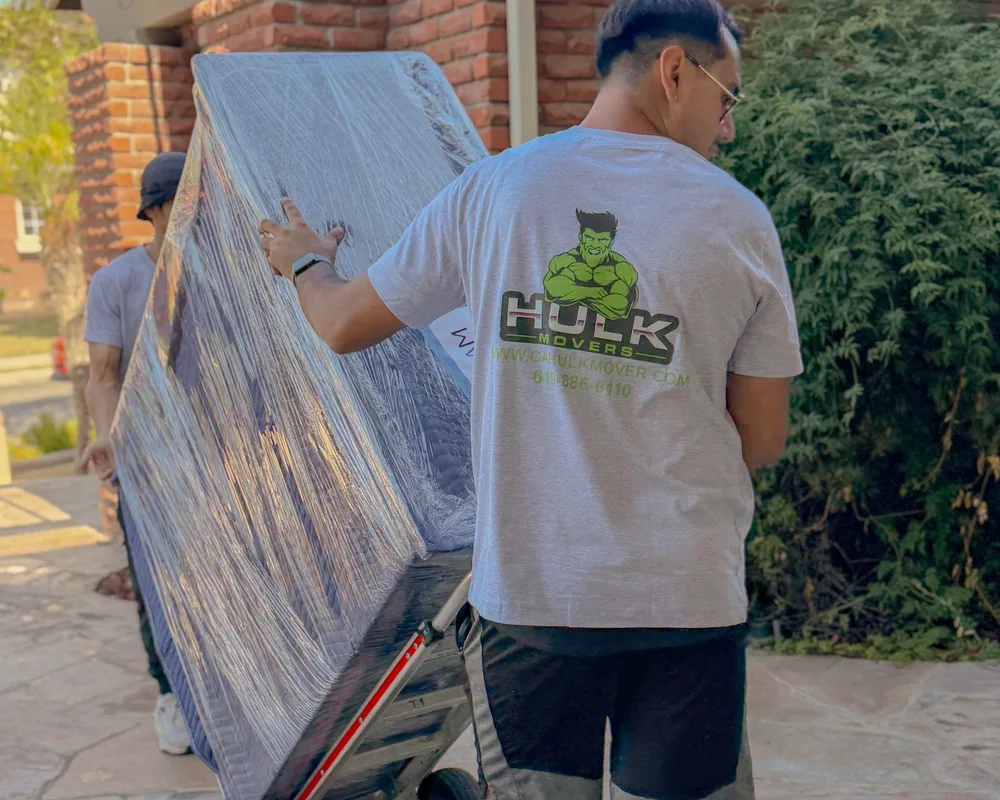
A safe goes on a heavy-duty appliance dolly, strapped tight, and it is walked, not carried. The door side is the heaviest, which matters on stairs and ramps, so the crew positions it with that in mind. Hardwood and tile get sheets of board laid down to spread the load and keep the wheels from marking the floor. Outside, a ramp takes it up into the truck, where it is stood against the front wall and strapped so it cannot tip in a turn.
If the safe is bolted to the slab, sort out who removes the bolts before moving day. And decide where it is going at the new house before the crew arrives. A safe that goes into the garage and then has to move to a bedroom closet a week later has been moved twice, and the second move is often the harder one.
Which San Diego homes make this harder?
Hillside lots are the big one. Homes above the street in La Jolla, Point Loma and around Mount Helix often have stepped walks and long carries from the curb to the door, and the truck may not be able to park close. Our La Mesa movers page describes the switchback driveways above the village; the same planning applies to a piano coming out of one of those houses.
Older neighborhoods bring narrow doorways and front porch steps. The 1920s bungalows in North Park, Kensington and Mission Hills were not built with a baby grand in mind, and interior doors can be tighter than the front one. In North County inland, gravel and dirt driveways in Poway, Ramona and Valley Center swallow dolly wheels, so the crew lays a hard path over them. Condos and apartments add elevator size and weight limits, which are worth checking with the building before assuming a safe can ride up.
Can you move just the piano or safe, without a full move?
Yes. Plenty of heavy item jobs are one item: a piano sold to a neighbor, a safe going from the garage to a new house across town, a home gym heading to a storage unit. It works the other way too. If you are already booking residential movers for the whole house, add the piano or safe to that same job and the extra equipment and hands come on the same truck. Heavy pieces usually load early and sit against the front wall, where the load is most stable.
How should you get ready?
- Clear the route: rugs rolled up, side tables moved, pictures off the walls along a tight hallway.
- Empty the safe completely and lock the door. Close the piano lid.
- Know exactly where the item goes at the new house, and measure that spot.
- Tell the crew about every step and the floor surfaces at both ends.
- Keep pets and kids out of the path while the item is moving.
If you are not sure whether your stairs or driveway are a problem, send photos and ask. It is a quick conversation, and it is much better had before the day than in the driveway.
Common questions
Does a piano need to be tuned after a move?
Usually, yes. Moving shakes it and a change in humidity pulls it out of tune, especially going from the coast to drier inland air. Most technicians suggest waiting a couple of weeks after the move so the piano settles into the room before it is tuned. Tuning is a piano technician's job, not the mover's.
Can movers take a gun safe up a flight of stairs?
Often, but it depends on the safe, the stairs and the landing at the top. Describe all three when you book, with photos if you can. Sometimes the better plan is placing the safe on the ground floor, because a safe that goes upstairs has to come back down on the next move too.
Should I empty my gun safe before the movers arrive?
Yes, completely. Contents add weight and shift when the safe tilts. Firearms, ammunition, cash and important documents should travel with you, not inside the safe on the truck. Lock the empty door so it cannot swing open on a ramp or a slope.
Do I need a specialist piano mover for an upright or a baby grand?
Not for a household upright or baby grand. Those move with piano boards, padding, straps and a crew sized to the stairs and path. If you have an unusual instrument, like a concert grand or a restoration piece, describe it when you call and ask directly.
Planning a move in San Diego?
Free estimate from the crew that works these streets every week.