Glassware, electronics, and artwork break for one of two reasons: not enough cushioning, or nothing keeping them from shifting in transit. Both are preventable with the right materials and a little patience.
Start with the right materials
Sturdy boxes, real bubble wrap, packing paper, and strong tape do more work than any amount of careful handling. Skip newspaper for wrapping; the ink transfers onto dishes and light fabrics. Specialty boxes exist for dish sets, mirrors, and flat-screen TVs for a reason: they hold the shape that keeps those items from flexing.
Leave no empty space inside a box. Gaps are what let items shift and collide during the drive. Fill them with towels, packing paper, or clothing you were packing anyway.
Wrap items individually and label the box
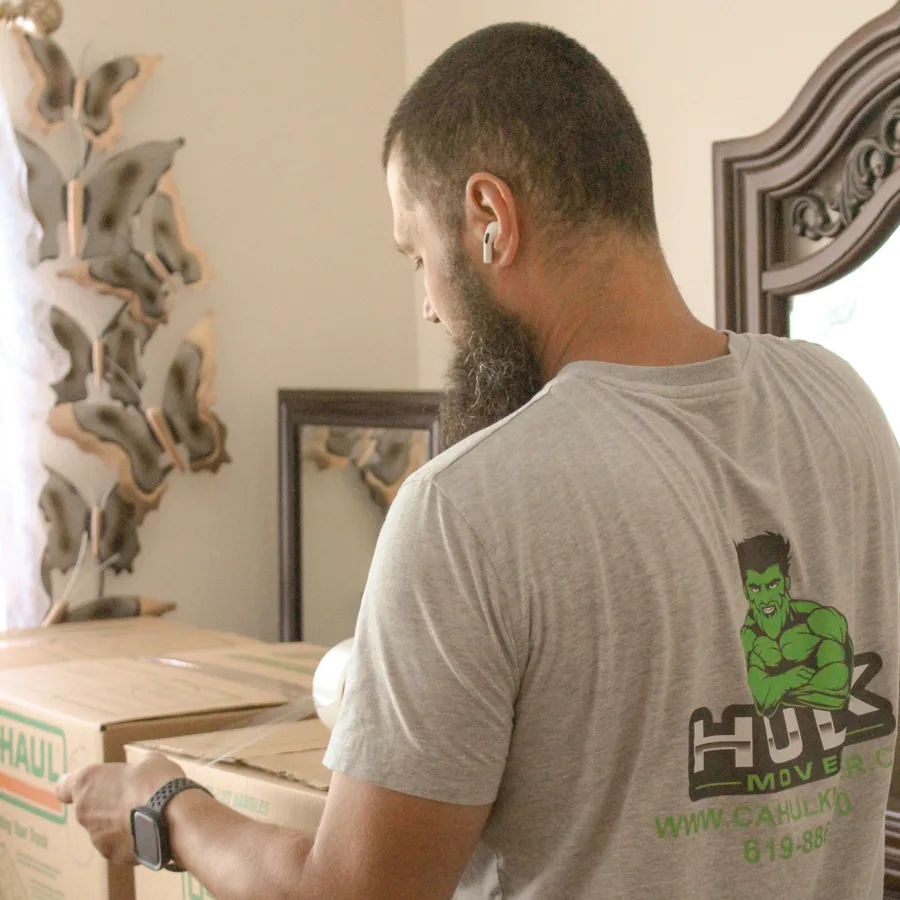
Wrap each fragile piece on its own, then tape it closed. Dishes and glassware travel best stacked on their edge, like records, inside a padded box rather than flat. Mark every box that holds fragile items on at least two sides, and note "this side up" if it matters.
Heavier on the bottom, lighter on top
Layer a box the way you'd pack a cooler: heavy items on the bottom, delicate ones on top, cushioning between each layer. Reinforce the bottom seam with extra tape before you fill it. For anything expensive, its original packaging is usually still the best packaging available.
Or skip the guesswork
Our packing services cover exactly this: full packing, partial packing for just the fragile stuff, and the specialty materials most people don't keep lying around the house. If you're building out a full plan for moving day, our moving checklist covers the rest of the timeline. Call (619) 886-0110 for a quote.
Planning a move in San Diego?
Free estimate from the crew that works these streets every week.