
San Diego is one of the more distinct big cities to move to in California. It isn't a single dense urban core; it's a spread of coastal, canyon, and inland communities, each with its own feel, connected by the same handful of freeways. Here's what actually matters if you're relocating here, from a local moving company that has worked these neighborhoods since 2019.
The geography, in short
San Diego sits in the far southwest corner of the state, bordered by the Pacific Ocean to the west and Mexico to the south. The city is large and low-density compared with somewhere like San Francisco, which means “San Diego” covers a wide range of housing stock and commute patterns depending on where you land.
Neighborhoods worth knowing
- La Jolla: coastal, upscale, and hilly, with narrow residential streets and a mix of single-family homes and view condos. Parking is tight near the village and the coastline.
- Downtown and the Gaslamp Quarter: high-rise condo living, walkable to Petco Park and the bay, in buildings that usually require elevator reservations and loading dock scheduling for a move.
- Hillcrest: dense, walkable, and central, with a mix of older apartment buildings and craftsman homes on hilly streets.
- North Park: bungalow-heavy, close-set housing with alley access on some blocks, popular with renters.
- Point Loma: peninsula living with steep driveways and ocean-view homes, close to the airport and Naval Base San Diego.
- Coronado: a resort-feel peninsula connected to the mainland by bridge, with a mix of historic homes and newer condo buildings.
Inland communities like Rancho Bernardo, Poway, and Chula Vista trade the coastal premium for larger lots and newer construction, with more two-story houses and attached garages, which changes what a move actually involves.
Getting around
San Diego is car-centric. I-5 runs the coast north-south, I-8 cuts east-west through Mission Valley, and I-15 and I-805 handle the inland north-south routes. The Metropolitan Transit System runs buses across most of the city and a trolley system with Blue, Orange, and Green lines, including the newer extension out to UC San Diego. Traffic on the coastal freeways backs up during commute hours, especially where I-5 narrows near downtown.
Cost of living
San Diego runs above the national average for cost of living, and housing is the biggest driver of that gap, whether you're renting or buying. Utilities, groceries, and dining out also land above average. Most people who move here weigh that against the climate and the access to the coast, and decide it's worth it. If you're relocating for work, it's worth asking a local real estate agent about the tradeoffs between coastal and inland neighborhoods before you commit to a lease.
Work and industry
The local economy runs on a few large sectors: healthcare and biotech, anchored by UC San Diego Health and companies like Illumina; defense and the military, with Naval Base San Diego in the city and Marine Corps Base Camp Pendleton to the north; tourism; and international trade through the San Ysidro border crossing with Tijuana. Qualcomm is one of the larger private employers headquartered here. If your move is tied to a job in one of these sectors, it's worth checking which side of the city puts you closest to work before you sign a lease.
Schools
San Diego Unified School District covers most of the city proper, with ratings that vary block by block, so it's worth checking a specific address rather than the district as a whole. For higher education, UC San Diego, San Diego State University, and the University of San Diego all have a presence in the region and shape the rental market in the neighborhoods around them.
What to plan for on move day
A few things about San Diego change how a move actually goes:
- Coastal neighborhoods like La Jolla, Pacific Beach, and Ocean Beach have narrow streets and limited parking, so a truck needs a plan for where to park before it arrives.
- Downtown high-rises usually require booking a freight elevator and loading dock window in advance through the building's management office.
- Canyon-adjacent neighborhoods like Kensington and Bankers Hill have steep driveways and stairs that add time to a move regardless of how much you're bringing.
- The mild, mostly dry climate means weather rarely delays a move here, which is one advantage over relocating somewhere with a real winter.
Moving here with Hulk Movers
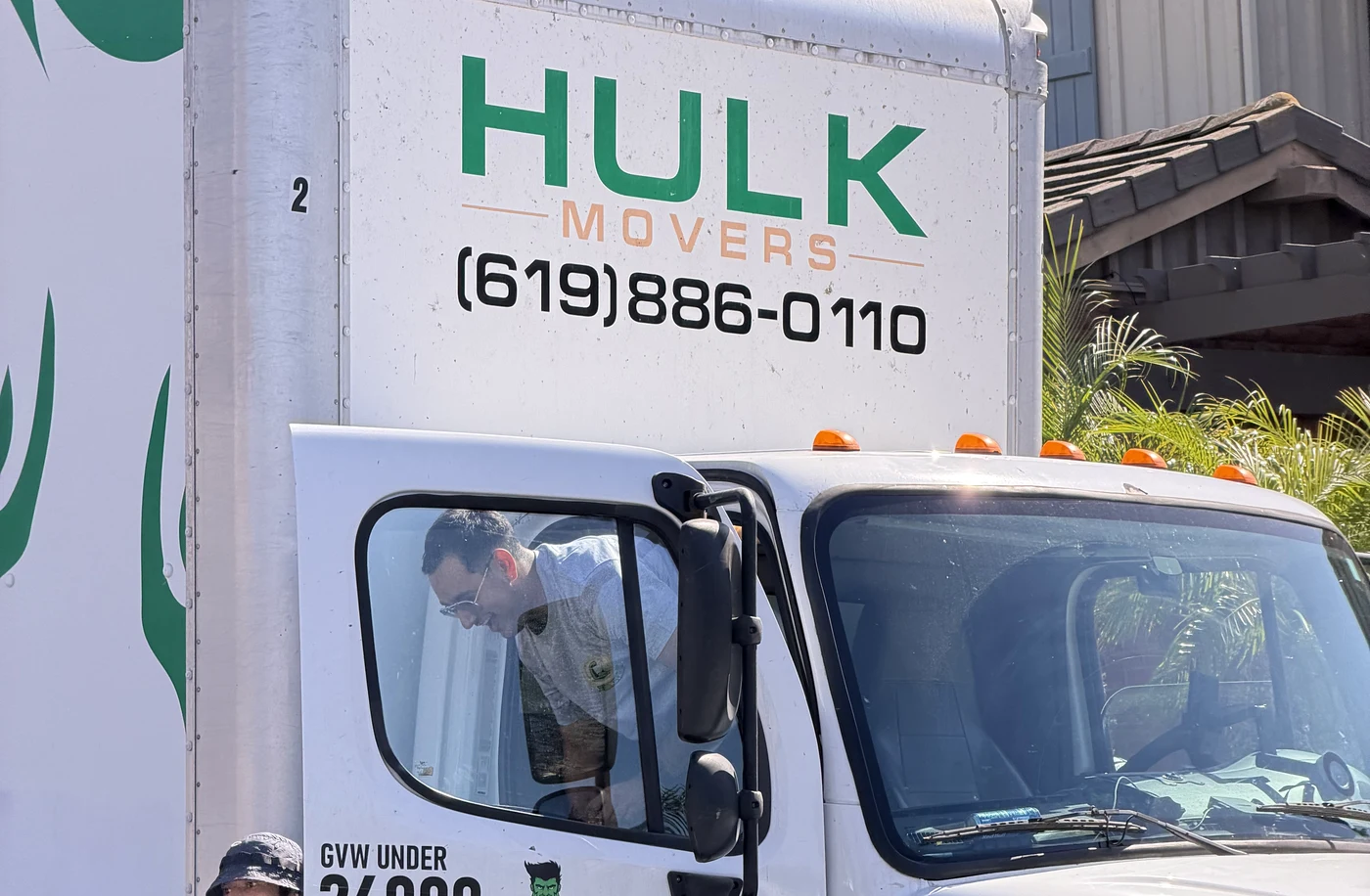
Hulk Movers has handled local and long-distance moves into San Diego since 2019, and knows the parking, elevator, and access rules for the neighborhoods above firsthand. Whether you're coming from across the county or across the country, the long-distance team and local crews can walk you through what your specific building or street requires before move day. Reach out to start planning your move to San Diego.
Planning a move in San Diego?
Free estimate from the crew that works these streets every week.